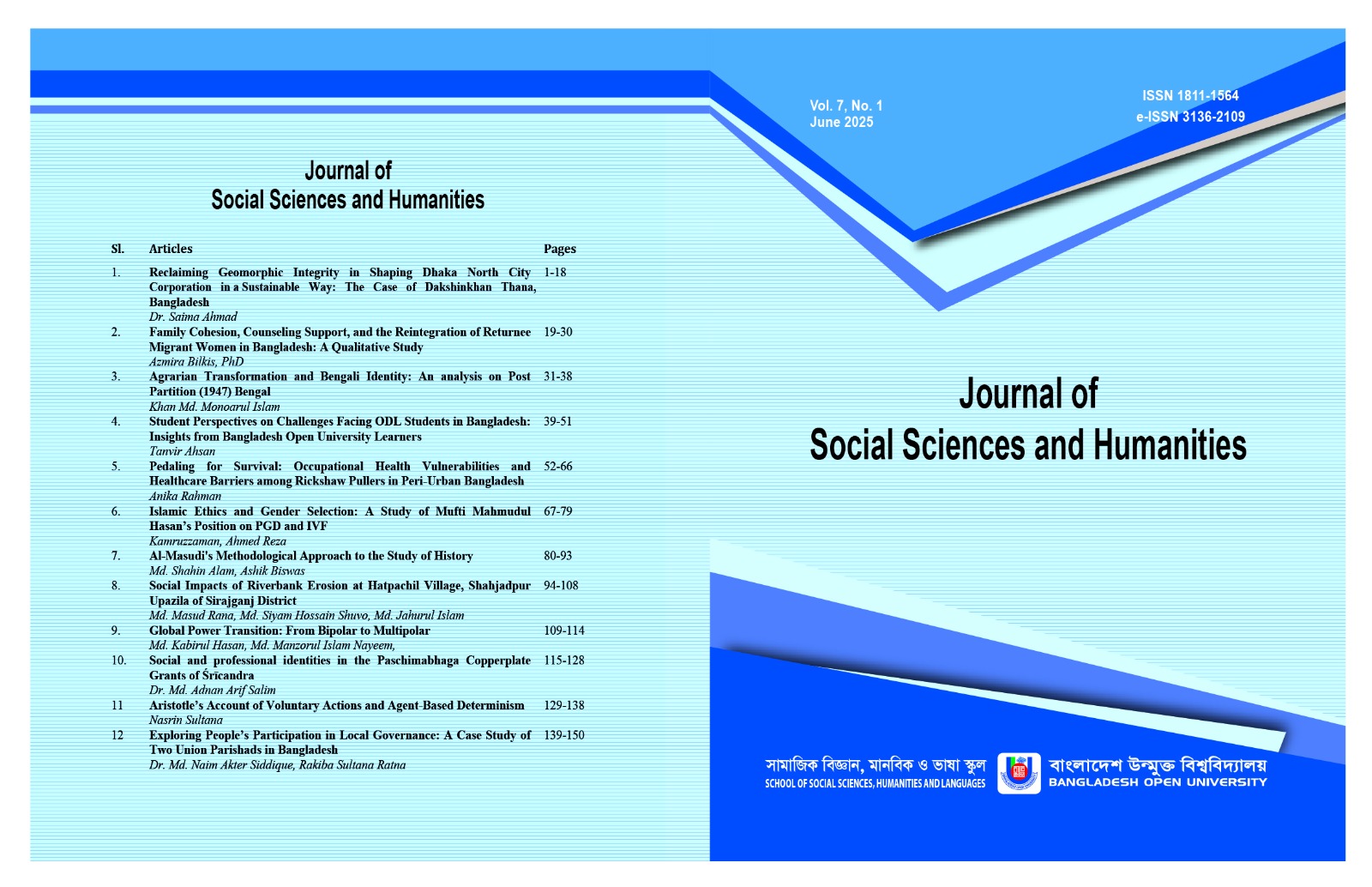
Pedaling for Survival: Occupational Health Vulnerabilities and Healthcare Barriers among Rickshaw Pullers in Peri-Urban Bangladesh
DOI:
https://doi.org/10.59738/jssh.v7i1.42Keywords:
informal labor, occupational risk, health-seeking behavior, structural inequality, peripheral urban areaAbstract
Rickshaw pullers are an integral part of the informal labor force in the transportation system of Bangladesh, yet they remain marginalized and vulnerable to occupational and environmental risks. Despite their indispensable contribution, research on pullers’ occupational health hazards, treatment-seeking behavior and healthcare access has mainly focused on urban and rural settings, while peri-urban areas remain overlooked. This exploratory quantitative study examined health vulnerabilities and healthcare barriers among 30 rickshaw pullers in Tetuljhora Union, Savar, Bangladesh, through descriptive survey data analyzed via structural violence, social determinants of health, and social exclusion frameworks. Given the use of convenience sampling, the findings of the research were interpreted as indicative of patterns within the study area rather than representative of all rickshaw pullers in Bangladesh. Findings showed frequent self-reports of chest discomfort, musculoskeletal pain, and respiratory issues alongside occupational stress and poor living conditions. While pullers perceived doctors as the best providers, most depended on informal providers due to financial hardship, limited literacy, and time constraints. The study critiques institutional neglect and calls for inclusive reforms such as mobile clinics, subsidized diagnostics, and health awareness programs to improve informal workers’ well-being.
Downloads
Published
Issue
Section
License
Articles published in the Journal of Social Sciences and Humanities (JSSH), Bangladesh Open University, are licensed under the Creative Commons Attribution-NonCommercial 4.0 International (CC BY-NC 4.0) License. Authors retain copyright of their work. The license permits others to share and adapt the work for non-commercial purposes, provided appropriate attribution is given to the original author(s) and the source is acknowledged.
For the full license terms, please visit: https://creativecommons.org/licenses/by-nc/4.0/